



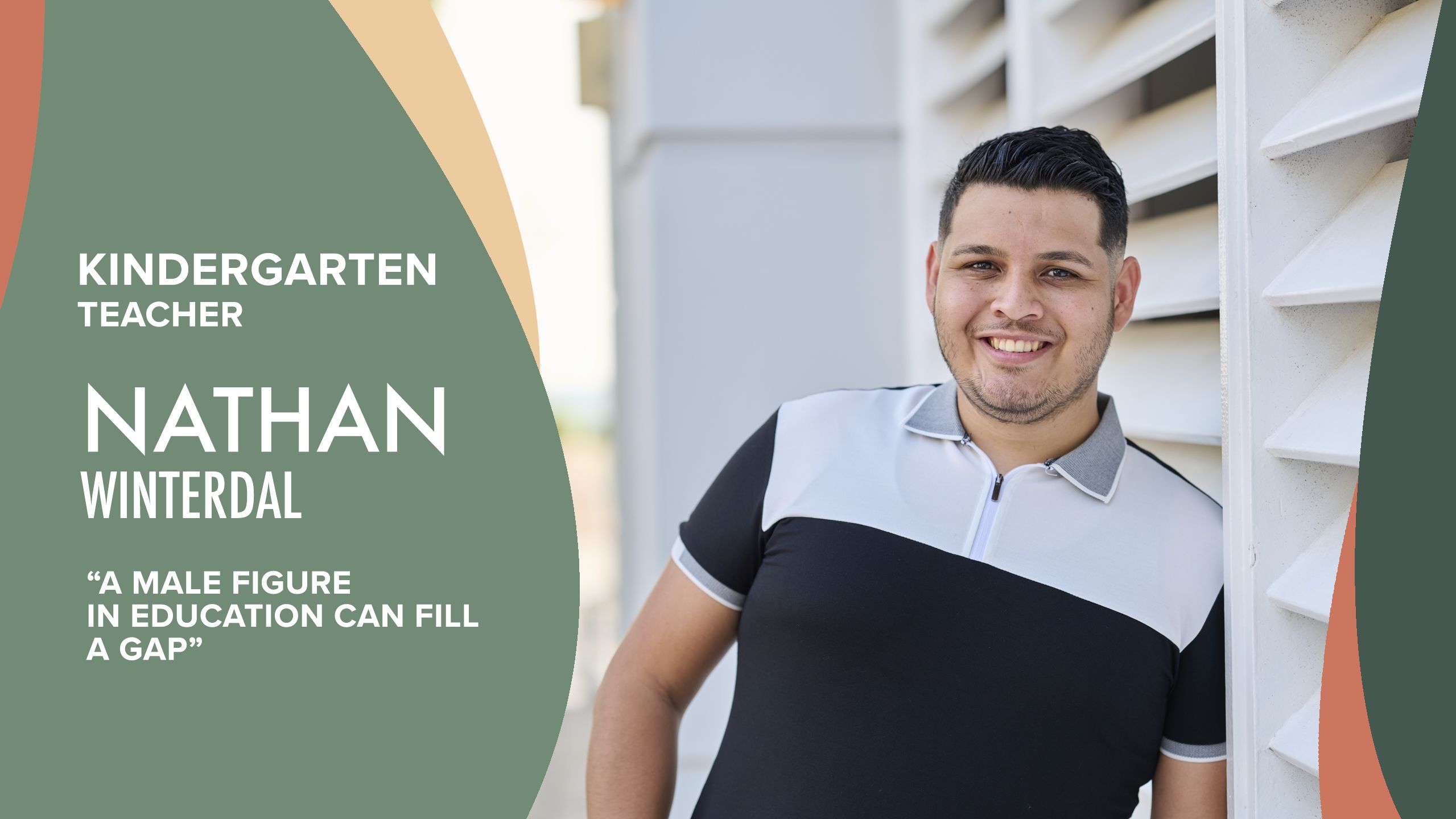




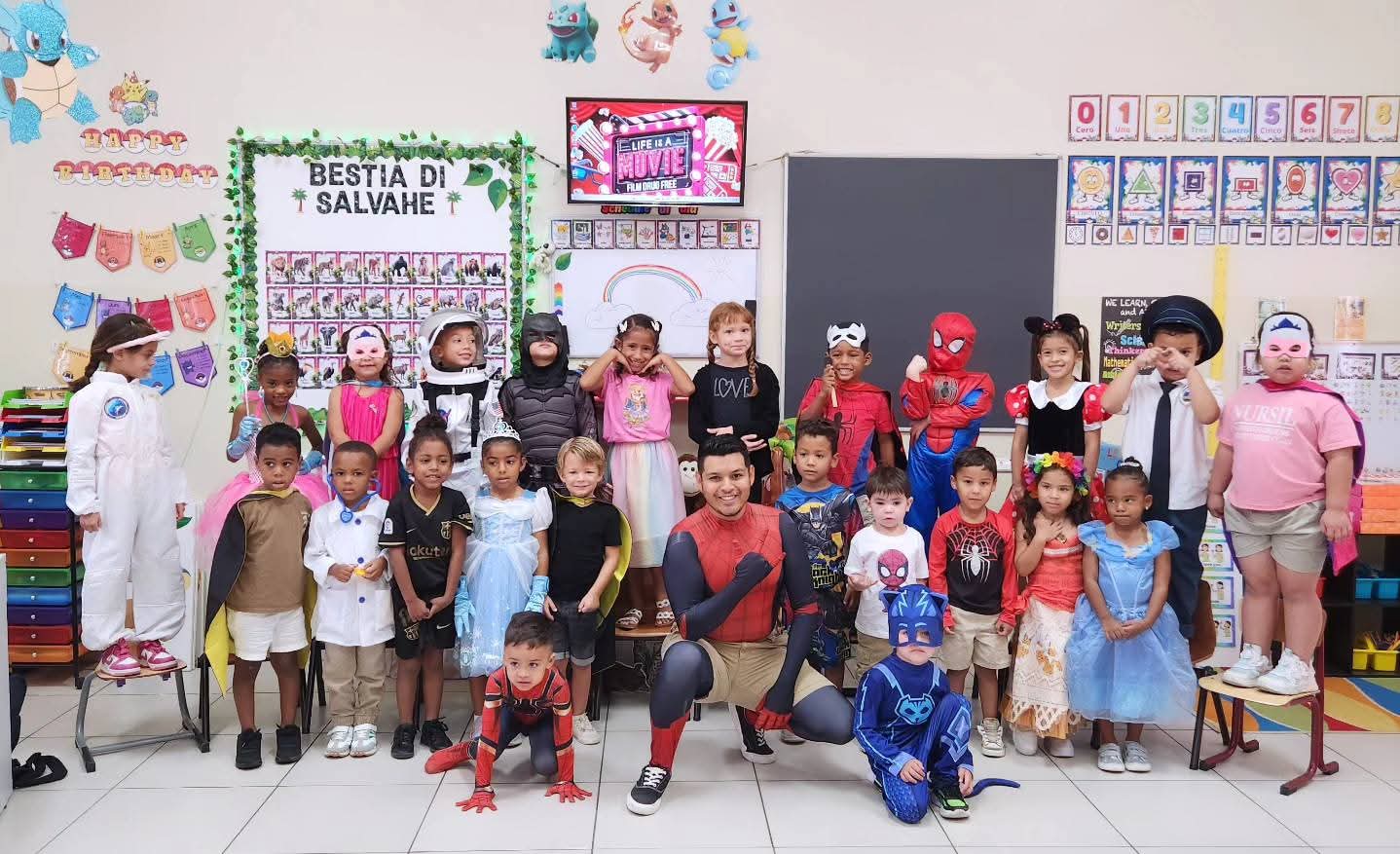
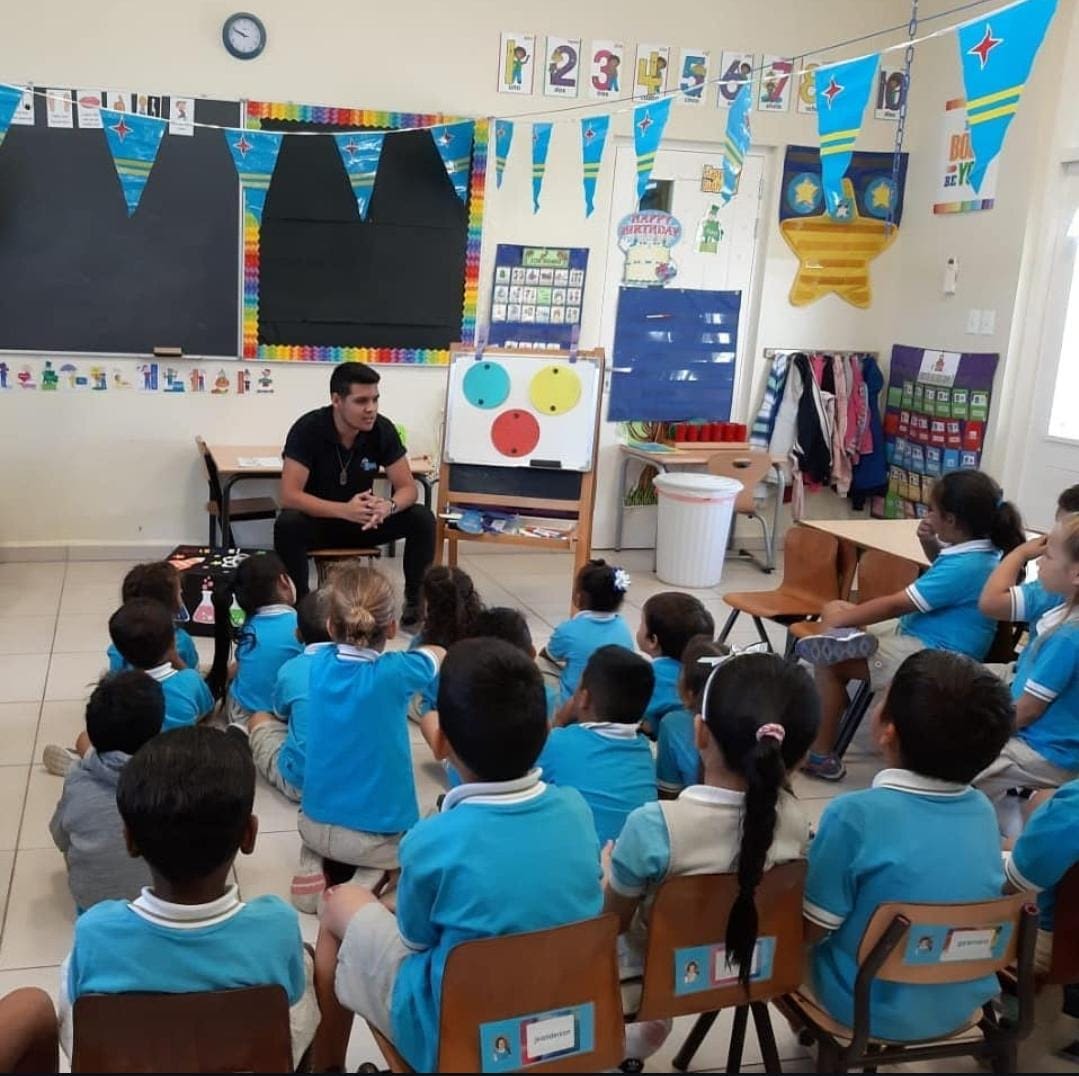
Kindergarten is almost always associated with female teachers. But at Arco Iris Kleuterschool, one of the guiding voices in a classroom of young children is a male voice: Meester Nathan Ricardo Felix Winterdal. At 28, Nathan carries the title of kindergarten teacher with pride every single day, shaping the next generation on a foundation of love and discipline. In a profession long dominated by “female teacher” Nathan challenges expectations and creates a space where learning is joy, curiosity, and inspiration.

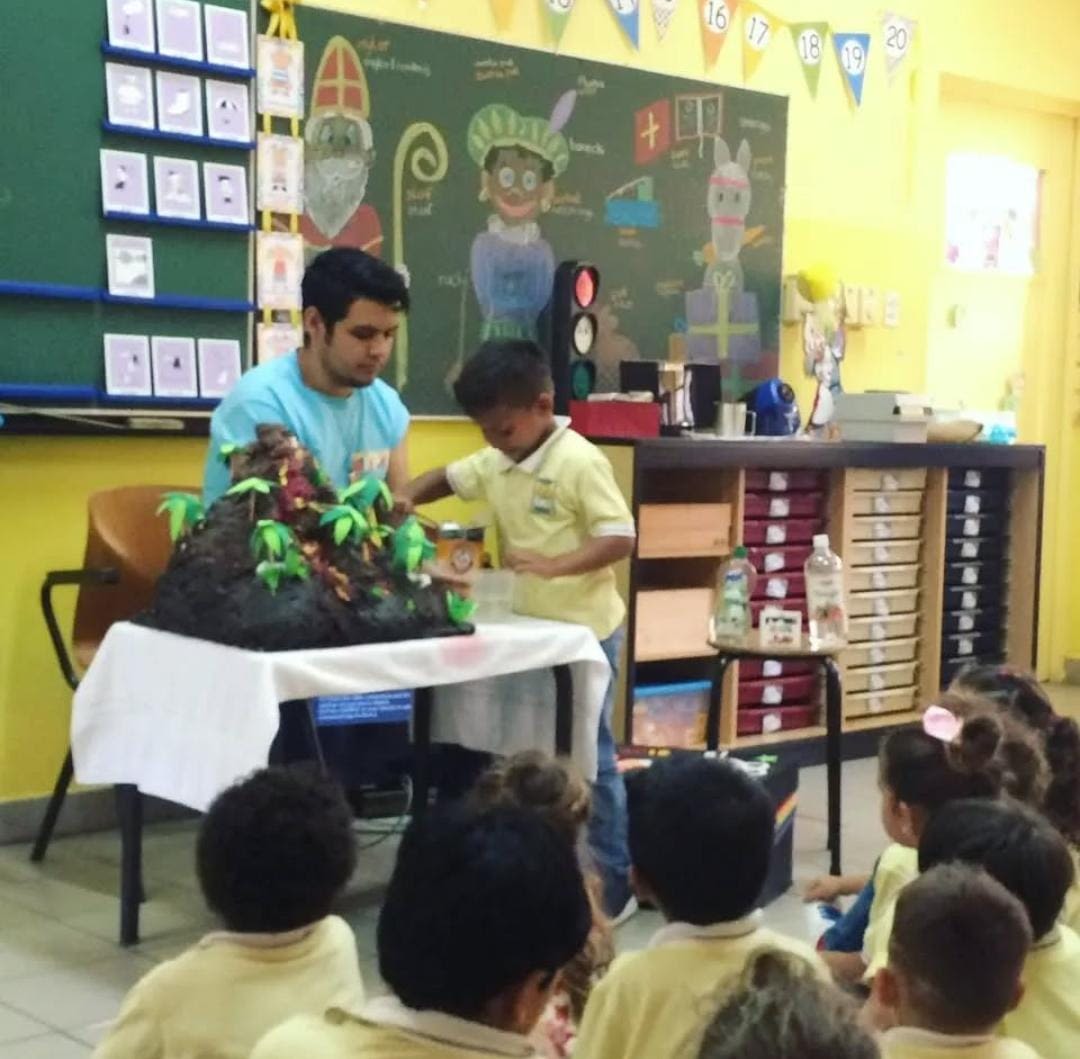


Born and raised in Rooi Koochi (Savaneta) and partly in Dakota, Nathan recalls growing up in a humble family full of healthy competition, love, and happiness. “My favorite memory was family game nights. That sense of togetherness marked me forever,” he says.




As a child, Nathan never had a teacher who truly changed his life. But at Colegio he met History teacher Kenny Meyers. “His lessons always had a spark, you felt happy to be in his class. He reignited my passion for learning and confirmed my desire to become a teacher,” Nathan explains.




Why a kindergarten teacher?
“I chose this career because it has been my love and passion since I was young. I became a kindergarten teacher because I want to help every child discover the joy of learning from an early age. At that age, every small achievement is so significant. I feel great satisfaction knowing I can guide them in those moments. I want to create an environment where they feel love, self-confidence, and safety so we build a strong foundation for the rest of their lives.”

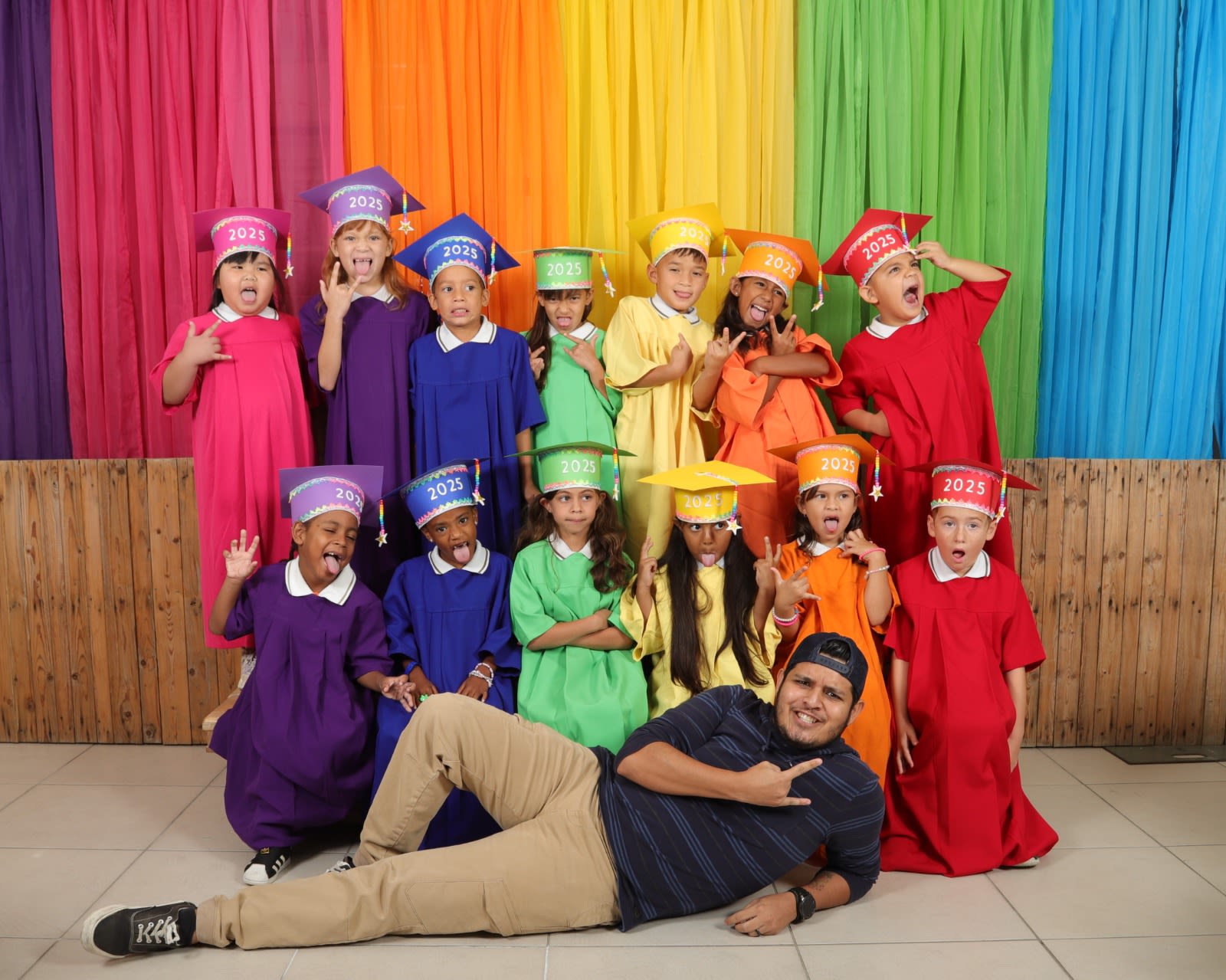



Step into Nathan’s class and you’ll feel his energy right away. He describes his style as creative, hyper, and fun. “Children are like sponges. Why not take them further than the official goals?” In his class, the alphabet is even taught in sign language, tablets are used for educational games, and science becomes a hands-on adventure. “Science is my favorite subject. It connects everything: language, math, music and it teaches them about daily life. I use technology in class by letting them interact with tablets for educational games once every two weeks for 30–45 minutes. The lessons are interactive, and children learn so much more when they are actively involved.”

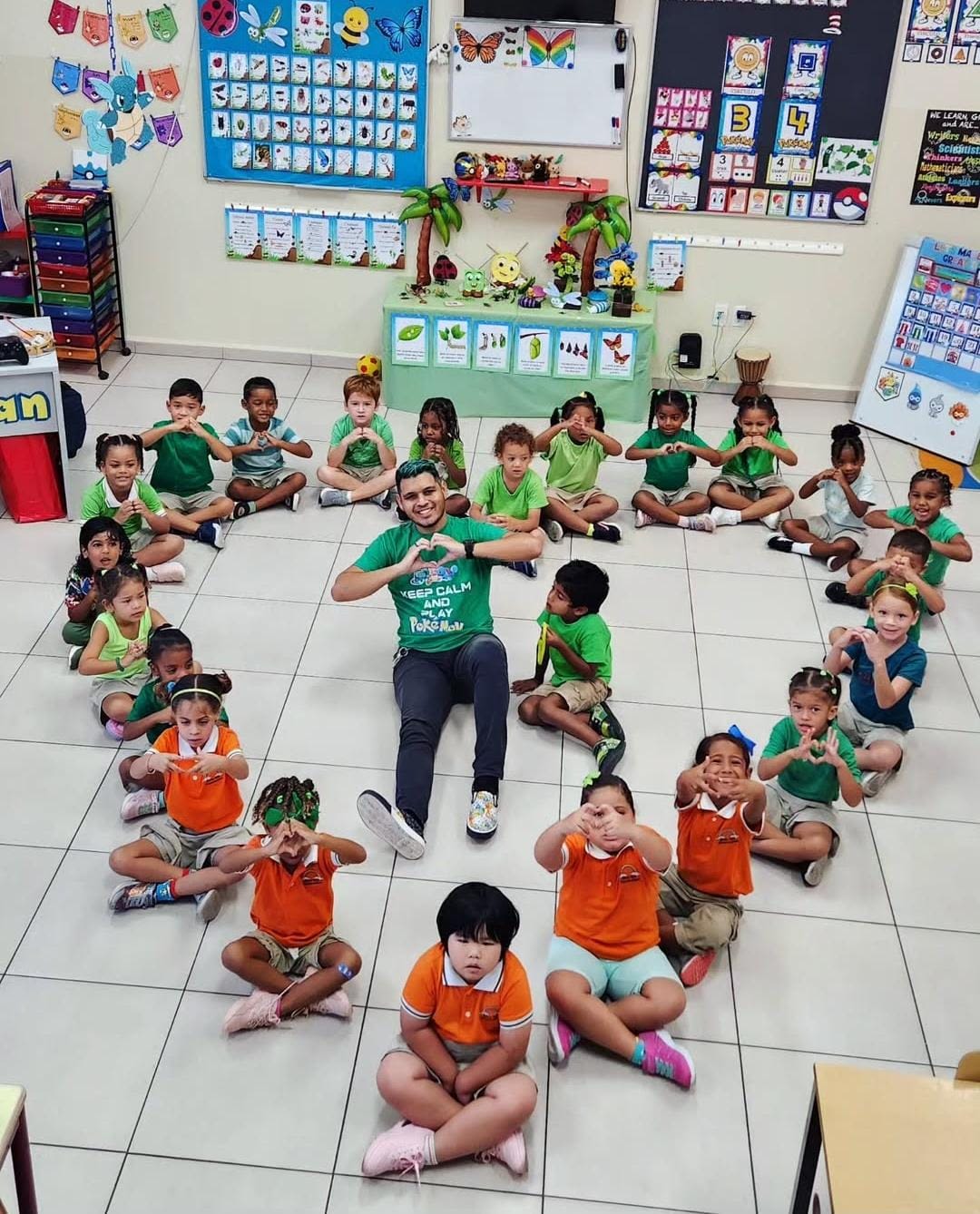




“I involve parents in their children’s education by creating an open relationship where they can always come to me with questions, doubts, or concerns. I make sure to listen to what they need, and every week I send a PowerPoint with the week’s lessons so they can practice at home. If I notice a child needs extra support, I communicate this with the parents and give them tips on how to help.”







Nathan recalls one student, Kijanu Bremo, who showed an unexpected passion during the unit on space. “I taught him about the solar system, and his curiosity kept growing. He kept asking questions until he finally said he wanted to be an astronaut. That showed me what our role is: planting a seed that can change the future.”




It’s impossible for Nathan not to notice the double standard as a male teacher. “As a kindergarten teacher, people look at me differently, because in society’s view it’s not normal for a kindergarten teacher to be a man. For example, if a child hugs a female teacher, nothing happens, but if the opposite occurs, it can be seen as wrong. Showing affection is another example of this double standard. At the end of the day, I’m here for the kids. I give my very best to provide the education they need. Clear boundaries are important. From the start, I tell them what I tolerate and what I don’t. I create an environment where the children feel safe in the classroom to learn and explore. They learn norms and values, to understand what is allowed and what isn’t.”

“There are many children without a father figure at home,” Nathan says seriously. “A male teacher can help fill that gap. We give them guidance, affection, and the support they’re missing. I want them to learn and feel that I believe in them.”


Nathan has a realistic view on online and homeschooling. “If they meet all the requirements, that’s fine. But the social and emotional part is missing. A school is more than letters and numbers; it’s training for life.” He also sees a big shift: children are growing up in a digital world. “That means we teachers have to keep innovating. I use tablets with educational games, but I also teach them that technology must be used responsibly.”



“As educators, we also use ChatGPT and AI in our teaching. It’s a great tool for finding new lesson ideas and being innovative. But at the same time, if you don’t research and try things yourself, you won’t really learn.”








“Teachers aren’t well paid. Our work isn’t just from 7:30 a.m. to 3:30 p.m. We still have to go home to look at tests, prepare plans for the new week, create new teaching materials, plan different activities, and more. On top of that, a young male teacher often gets paid less than an older colleague with the same experience. That’s not fair. For example, when I finished school I was 24 years old and was paid much less compared to a colleague who was older than me, even though we graduated the same year. Simply because they were older, they were paid more, even though we were doing the same work but the pay wasn’t equal.”
“The government can’t just give incentives or try to motivate people to choose the teaching career. It has to come from within them. Otherwise, they enter teaching for the wrong reasons or out of obligation, and they won’t give the children the education they deserve.
His proposal? "Raise salaries and invest more in education. That way we can support and motivate the teachers we have."





“In 10 years, I see myself wiser, with the same dedication. As teachers, we never stop learning. My goal is to become a vice principal, but always with the same energy.”


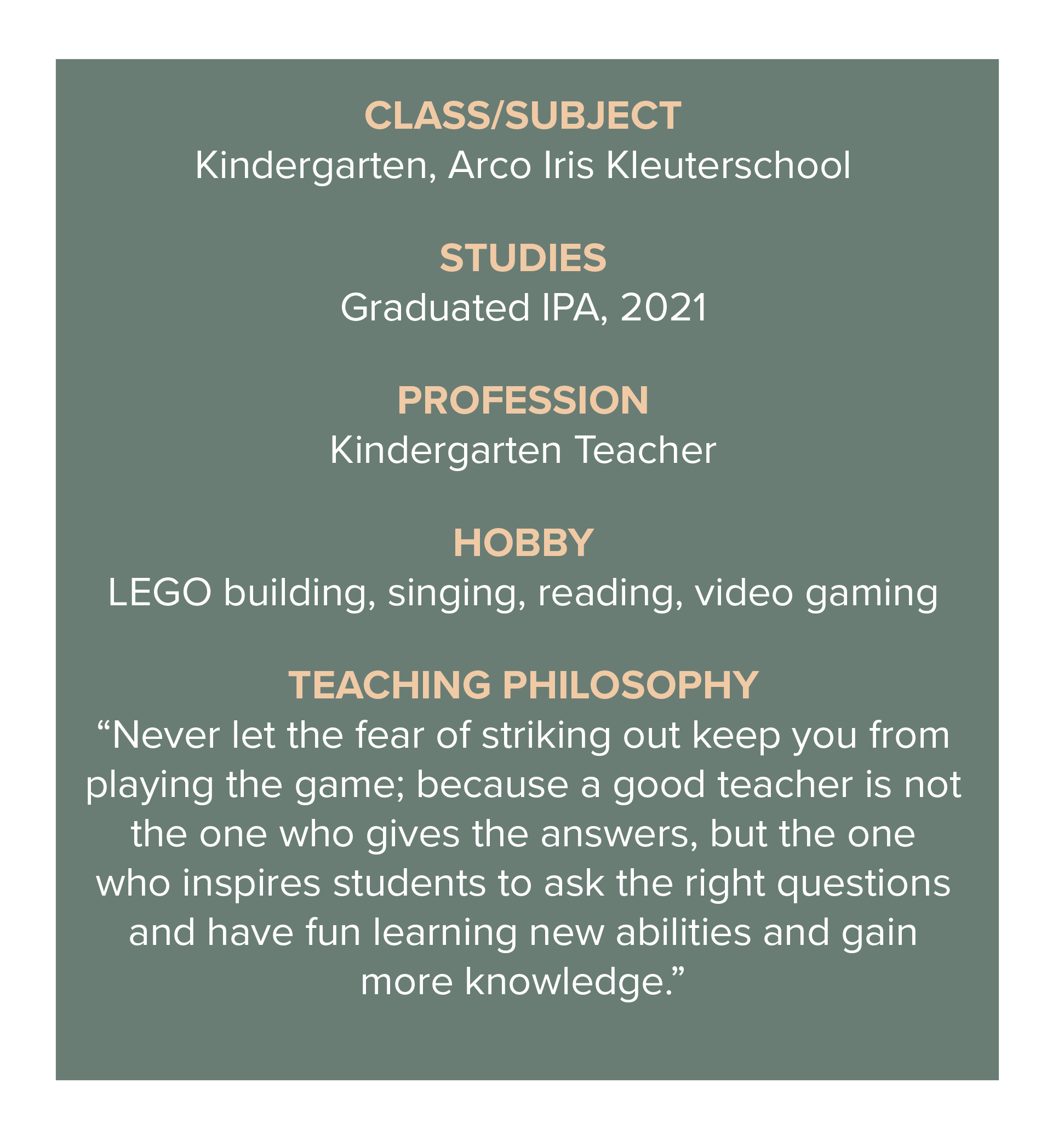
“A good teacher is not the one who gives all the answers, but the one who inspires students to ask the right questions.”







 Built with Shorthand